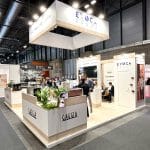
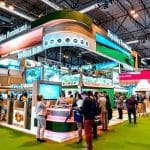
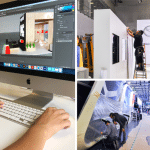
Shopping centre stands put a brand directly in front of thousands of shoppers, in a space designed for browsing and buying. Whether it is a promotional stand for a product launch, a pop-up shop for the Christmas season or an interactive brand activation in the atrium, the design decides whether people stop or walk past. This guide explains what makes a shopping centre stand work, the practical rules to plan for and how it differs from a trade fair stand.
We design and build exhibition stands at Fira Barcelona, IFEMA Madrid and across Europe, and we also create retail and promotional spaces, such as the Lancôme space at Barcelona airport. The same principles apply wherever a brand meets the public.

Why the design of shopping centre stands matters
Shopping centres are busy, dynamic places where people come to shop, eat and spend time. Among dozens of shop windows, a stand in the common areas has a few seconds to catch attention. A well-planned, attractive design can be the difference between going unnoticed and becoming the place everyone stops at.
The audience is also different from a trade fair. Shoppers are consumers, not trade buyers. They have not come to see you, they are not planning meetings, and they will only engage if the stand is immediately appealing, easy to approach and clearly worth their time.
Types of promotional and retail stands
- Promotional stand: a short campaign to present a product, collect sign-ups or hand out samples.
- Pop-up shop or kiosk: a temporary point of sale, often seasonal, with stock, a till and storage.
- Product launch or tasting point: a stand designed around demonstrations or tastings.
- Brand activation: an immersive or interactive installation designed for experience and social sharing.
- Touring stand: a modular unit that moves between several centres or cities during a campaign.
Eight keys to effective shopping centre stands
1. Stand out in the crowd
Shopping centres are full of brands competing for attention. A creative stand with a strong visual presentation, recognisable colours and something interactive is far more likely to stop passers-by and spark curiosity. Height, lighting and a clear focal point help it be seen from a distance and from upper floors.
2. Be visible from every side
Unlike most trade fair stands, a stand in a mall or atrium is often seen from all four sides. Design it as a 360° object: no blank backs, branding on every face and storage hidden inside the structure.
3. Reflect the brand identity
A stand is a chance to communicate the brand’s values as well as its products. A coherent, authentic design, in line with the brand’s stores, packaging and advertising, builds recognition and trust.
4. Create an experience
Interactive stands that let people try the product, take part in a demonstration or receive a sample create an emotional connection and a lasting impression. A positive experience also makes shoppers more likely to share it with friends and online.
5. Design for sales
A well-planned stand guides the shopper towards the featured product and makes buying easy. Think about where products are displayed, where the payment point goes, how a small queue forms and where stock is kept.
6. Ergonomics and comfort
Counters at the right height, enough space for staff to work, comfortable lighting and, where relevant, a seat or two for longer demonstrations. A welcoming, well-organised stand invites people to stay longer.
7. Technology with a purpose
Interactive screens, augmented reality or virtual try-on can make a stand more engaging, especially for younger audiences. Plan power and sightlines from the start and make sure the technology supports the message rather than replacing it.
8. Adaptability
Shopping centres host events, promotions and seasonal campaigns all year round. A stand that can be reconfigured, with replaceable graphics and modular elements, can be used for Christmas, sales periods or a new launch without starting from scratch.

Choosing the location within the centre
Where the stand sits in the centre matters as much as its design. Main entrances, atriums, escalator landings and the areas near anchor stores and food courts usually have the highest footfall, but also the most competition and the highest rental. Quieter corridors are cheaper but need a stronger design to draw people in.
When you choose a location, consider sightlines from the main routes, from upper floors and from escalators; the shoppers who are most likely to match your target audience; and the neighbouring shops, which can reinforce or undermine your message. Ask centre management for footfall data where available, and visit at different times of day before committing.
Practical rules to plan for
Shopping centres are public spaces with their own operating rules, and every centre has different design criteria. Before you design, speak to centre management and check:
- Design approval: most centres must approve the stand’s plans and appearance before installation.
- Footprint and height limits, as well as clearances for emergency routes and shop entrances.
- Fire safety: materials and textiles usually need to be fire-retardant, with certificates available.
- Insurance: public liability insurance is commonly required.
- Installation times: build-up and removal usually take place outside opening hours, often at night.
- Power and data: availability, capacity and who pays for the connection.
- Floor protection, noise and smells: rules on fixings, music volume and food preparation.
- Security: how products and equipment are secured when the centre is closed.
These constraints affect the design directly. A stand that installs quickly with few tools, protects the floor and locks up securely overnight saves time and cost on every location.
Shopping centre stands vs trade fair stands
| Shopping centre stand | Trade fair stand (trade show booth) | |
|---|---|---|
| Audience | Consumers, passers-by | Trade visitors, buyers, partners |
| Main goal | Sales, sign-ups, brand awareness | Leads, meetings, deals |
| Duration | Days to months | Usually 2–5 days |
| Visibility | Often 360° | Depends on stand type: inline, corner, peninsula or island |
| Installation | Out of hours, short windows | Scheduled build-up days set by the organiser |
| Rules set by | Centre management | Organiser and venue technical regulations |
If your brand does both, a common design language across stores, shopping centre stands and exhibition stands reinforces recognition.
Integrating the stand into your marketing calendar
A shopping centre stand should not be an isolated action. Align it with campaigns, seasons and launches: festive decoration for Christmas, a featured product during a promotion, a new range at the start of a season. Plan the stand together with in-store displays and digital campaigns so the message is consistent.
Keeping the design up to date matters too. A stand that looks dated works against the brand, while fresh, well-maintained graphics and finishes signal quality.

Measuring results
Once the stand is live, measure its performance and gather feedback from customers and the sales team. Useful metrics include footfall at the stand, conversion to sales or sign-ups, samples distributed, average ticket and customer comments. These figures help improve the design for the next location and show whether the investment paid off.
A well-designed stand also has a longer-term effect: a positive, memorable experience strengthens the brand image long after the campaign ends.
Cost and reuse
Cost depends on size, materials, technology and how many locations the stand will visit. As a reference, a basic modular stand starts from €3,000–6,000; custom builds with premium finishes, integrated lighting and screens cost more. Space rental is agreed separately with each centre. Designing for reuse, with modular structures, replaceable graphics and storage between campaigns, lowers the cost per location. For a broader view of pricing, see our guide to exhibition stand costs in Spain.
Our approach
With over 20 years of experience, our own 2,000 m² workshop in Barcelona and our own installation crew, we design and build stands for trade fairs, events and retail spaces. For permanent retail projects, see our store and showroom design service; for temporary brand spaces, our custom stands page explains how we work.
Frequently asked questions
What is a shopping centre stand?
A temporary branded structure placed in the common areas of a shopping centre, such as a mall, atrium or concourse. It can be a promotional stand, a pop-up shop, a product launch or tasting point, or an interactive brand activation. Unlike a trade fair stand, it speaks to consumers rather than trade buyers.
What rules apply to stands in shopping centres?
Each centre sets its own criteria, so check with centre management before designing. Typical requirements include approval of the design, public liability insurance, fire-retardant materials, installation outside opening hours, limits on height and footprint, floor protection and rules on power supply and noise.
How long does it take to make a promotional stand for a shopping centre?
It depends on the complexity. A simple modular unit can be produced quickly, while a custom stand with integrated lighting, screens and storage needs several weeks for design, centre approval and production. As with trade fairs, starting early gives you more options.
Can the same stand travel to several shopping centres?
Yes, and it is often the most efficient approach. A modular stand designed for quick installation and transport can tour several centres, with graphics updated for each campaign or season, and be stored between uses.
How much does a shopping centre stand cost?
It depends on size, materials and technology. As a reference, a basic modular stand starts from €3,000–6,000; custom builds with premium finishes, lighting and screens cost more. The rental of the space is agreed separately with the shopping centre.
Do you build promotional stands outside trade fairs?
Yes. Alongside trade fair stands we design and build retail and promotional spaces, such as the Lancôme space at Barcelona airport, and we work on stores and showrooms. The same workshop and crew handle production and installation.
Planning a stand in a shopping centre?
Tell us about your brand, the centres you are considering and your campaign dates, and we will propose a concept and quote. Call +34 933 17 17 71, email factoriacreativa@factoriacreativa.net or contact us.