If your company is exhibiting in Spain, at Fira de Barcelona, IFEMA Madrid or both, a modular exhibition stand often looks like the obvious choice: quicker to produce, easier to reuse and kinder to the budget than a bespoke build. For many exhibitors it is the right call. For others it ends up looking like every other stand in the hall.
We have spent more than 20 years designing, building and installing stands at venues across Spain and Europe, and many of our international clients ask us the same thing before their first show here: modular or custom? This guide covers what a modular stand does well, where it falls short, and how to decide when you are exhibiting far from home.
What is a modular exhibition stand?
A modular exhibition stand is built from a system of standardised components: wall frames, panels, counters, header structures, storage units. These are combined to fit the floor space and shape of your plot. Instead of designing and manufacturing every element from scratch, you configure pieces that already exist.
Your brand is then applied on top: printed graphics, corporate colours, lighting, screens and furniture. When the show closes, the stand is taken down, stored and set up again for the next event.
The difference from a custom stand comes down to how far you can personalise it. A modular stand is based on standardised, reusable structures that adapt to different spaces. A custom stand is created specifically for your brand, your show and your goals, with full freedom over shape, layout, finishes and visitor experience.
Why international exhibitors choose modular stands
When the brief fits, a modular system has real advantages, especially for a company travelling to a show abroad:
- Lower upfront investment. Working with existing structures cuts down the bespoke design and manufacturing work.
- Shorter lead times. Simpler or modular projects usually need less preparation time, which helps if you have booked a show at short notice.
- One stand, several shows. The same base can travel across your European trade show calendar, with new graphics or a new configuration for each event.
- Faster build-up and breakdown. Components are designed to be assembled and dismantled quickly on site, which matters when venue build-up windows are tight.
- Less waste. Reusing structures means far less material thrown away after each show, something more and more visitors, buyers and procurement teams look at.
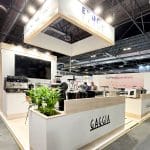
That last point is one we applied at Evoca Group’s stand at GUEXT 2024 in Madrid, where we combined reusable modular structures with FSC-certified wood, eco-friendly paint and low-consumption LED lighting.

The limits of a modular stand
Modular systems work well for a basic presence, or when budget or time is seriously limited. But they come with trade-offs you should weigh before committing:
- The system shapes the design. Dimensions, materials and layout depend on the components available.
- Less differentiation. Very different companies can end up with stands that look alike. In a hall with hundreds of exhibitors, that makes it harder to stop people in the aisle.
- Less room for experience. Product demos, tastings, integrated technology or unusual shapes are harder to achieve with a closed system.
So the question is not which option is cheaper, but which one gets you what you came to the show for.
Modular vs custom exhibition stand: a side-by-side comparison
Figures are indicative and depend on floor space, show, city, logistics and finishes.
| Criteria | Modular exhibition stand | Custom (bespoke) stand |
|---|---|---|
| Indicative cost | A basic modular stand can start at around €3,000–6,000 | Mid-sized: typically €20,000–30,000. Premium stands for major international shows can exceed €100,000 |
| Lead time | Shorter, since it starts from existing structures | Ideally start 4 to 6 months before the show (concept, 3D renders, manufacturing, logistics) |
| Personalisation | Limited by the system: mainly graphics, colour, lighting and furniture | Full: shape, layout, finishes, display areas and visitor experience |
| Reuse | High: designed to move between shows with new graphics or layout | Possible if planned from the start (reusable elements, storage) |
| Impact | Professional look, but harder to stand out | Stronger visual and commercial impact, exclusive design |
| Best for | First shows in a new market, tight budgets, busy show calendars | Product launches, brand positioning, competitive halls |
Exhibiting in Spain from abroad: three ways to use a modular stand
For a company based outside Spain, the question is also where the stand is made and who builds it on site. These are the three scenarios we see most often.
1. You already own a stand and ship it in
Many international exhibitors already have a modular system they use at home. You can bring it to Spain and have it installed locally. If you already have the design or the materials, we review the documentation and assess the set-up: dimensions, structure, electrical requirements, graphics, furniture and venue conditions. If anything needs improving, we suggest adjustments before the show. This is part of our stand assembly in Barcelona service.
2. You produce the stand in Spain and reuse it here
If Spain is a regular stop on your calendar, think Barcelona one spring and Madrid the next, producing the stand locally avoids shipping it back and forth. At the end of the show we manage dismantling, removal and, where the project calls for it, storage of the reusable elements until the next event.
3. A custom design built on a reusable structure
This is the middle path, and the one many of our clients end up taking: a design of their own, with their identity and their layout, built on modular structures that can be set up again. That is what we did for Arquia Banca at Infarma 2025 at Fira de Barcelona: a modular, sustainable stand with eco-efficient materials, designed to be versatile at future shows, with separate zones for advice, digital interaction and networking.
It is also how we approach sectors with a heavy show calendar. Our pharmaceutical exhibition stands, for example, include modular options with reusable structures, fast assembly and controlled costs, adapting the look to each event. If Infarma is on your list, see our page on stand design for Infarma.

When a modular exhibition stand makes sense (and when it doesn’t)
A modular stand is usually a good fit if:
- It is your first show in Spain. You want to test the market with a professional image without a large upfront investment.
- You exhibit several times a year. One reusable base, with new graphics for each event, spreads the cost across your calendar.
- The show is close. Starting from existing structures helps you make the deadline.
- Your goal is presence and meetings. You need a professional base to meet clients and distributors, not a large brand experience.
It is probably not the right fit if you are launching a product, competing with major brands, planning live demos or integrating technology. Then a custom design, or one on a reusable structure, will work harder for you. For shows outside your home market, our page on international stands covers how we coordinate design, production, logistics and on-site work.
Practical tips for a modular stand at a show in Spain
- Start from the objective, not the system. Lead capture, closed-door meetings, product display? The module layout should follow from that.
- Spend on graphics and lighting. They do most of the work of personalising a modular stand, and they are what people see from the aisle.
- Plan for your whole calendar. Design a base that works in different plot sizes and configurations, not just for the next show.
- Check the venue rules early. Every venue, including Fira de Barcelona, has its own requirements for build-up, breakdown, safety and electrical installations. With international shipping involved, those deadlines arrive fast.
- Plan what happens after the show. Dismantling, removal and storage are part of the project, especially when your team flies home the day the show closes.
How Factoría Creativa works with modular stands
At Factoría Creativa we design and build exhibition stands as turnkey projects: 3D design, manufacturing in our 2,000-square-metre facility, transport, assembly and dismantling, with facilities in Barcelona and Madrid. When the project calls for it, we use modular, reusable structures to make your investment go further, always with a design built around your brand. To be upfront: if all you need is a modular stand on a very tight budget, we are not the ideal company, because we could not add real value. If you want a reusable base that still makes an impact, tell us about your show and your goals and we will prepare a proposal.
Related reading
Frequently asked questions
What is a modular exhibition stand?
It is a stand built from standardised components that are combined to fit your floor space and can be assembled, dismantled and reused at different shows. Personalisation comes mainly from graphics, colour, lighting and furniture.
How much does a modular exhibition stand cost in Spain?
As a guide, a basic modular stand can start at around €3,000–6,000. The final price depends on floor space, the show, the city, finishes and logistics, so the best approach is to send us your brief for a tailored quote.
Is a modular or a custom stand better?
It depends on your goals. Modular is a good option when speed, reuse or budget is the priority. A custom stand is the better choice if you want to stand out, reinforce your brand image and create a space with more visual and commercial impact.
Can you install a stand we already own?
Yes. If you already have the design or the materials, we review the documentation and assess dimensions, structure, electrical requirements, graphics and venue conditions, and suggest adjustments if needed before installing it on site.
How far in advance should we book a stand for a show in Spain?
Modular or simpler projects can work with shorter lead times, but planning ahead always helps. For stands that need design, manufacturing, international shipping or graphic production, we recommend starting four to six months before the show.