A sustainable exhibition stand is one designed to use fewer resources, travel less, be reused as many times as possible and leave as little waste as possible when the show ends. Exhibitors, organisers and visitors increasingly expect it, and the good news is that a lower-impact stand can look just as striking as a conventional one, and often costs less over several shows.
Using fewer polluting raw materials reduces a stand’s footprint and shows real responsibility. Choosing renewable and reusable materials also strengthens your brand and demonstrates a genuine commitment to sustainability. In our experience, green materials do more than add character: they start conversations and create valuable connections with visitors.
At Factoría Creativa we have been designing, building and installing stands for over 20 years, from our own 2,000 m² workshop in Barcelona. This guide covers what sustainability really means for a stand, which materials to choose, how to design for reuse, and what it does to your budget.
What “sustainable” really means for an exhibition stand
The most sustainable stand is the one you do not throw away. That is why we work with a simple order of priorities:
- Reduce: design only what you need, with lighter structures and fewer single-use elements.
- Reuse: build a core that can return to the next show, and store it between events.
- Recycle: choose materials that can be separated and recycled at the end of their life.
- Dispose responsibly: only as a last resort, with waste sorted properly.
Material choice matters, but decisions about reuse, transport and what happens after dismantling usually matter even more. A stand made of “green” materials that goes in a skip after three days is not sustainable.

Why choose a sustainable exhibition stand?
The case rests on environmental, economic and brand benefits.
- Lower footprint: lighter, easier-to-transport materials reduce fuel use, and simpler build-up and dismantling reduce energy and labour.
- Savings over time: durable, reusable components can be used at many events without losing their finish or rigidity, so you save on production, logistics and, in many cases, storage.
- Brand image: exhibiting with a lower-impact stand is consistent with corporate responsibility commitments and builds closeness with clients who care about the environment.
- Organiser requirements: more and more fairs ask exhibitors and contractors to reduce waste and use certified materials.
Sustainable materials for exhibition stands
Several materials qualify as more sustainable because of their origin, manufacturing process or end-of-life options:
- Certified wood: timber and boards from responsibly managed forests with FSC or PEFC certification, which guarantee origin and help prevent deforestation.
- Aluminium frame systems: lightweight, durable and reusable for years, ideal as the structural core of a stand that travels to several fairs.
- Textile (fabric) graphics: printed fabric in tensioned frames replaces rigid printed panels. It weighs less, folds for transport and can be reprinted while the frame is kept. Recycled-PET fabrics are widely available.
- Recycled or structural cardboard: perfect for light pieces such as stools, counters and decorative walls; easy to build, economical and fully recyclable.
- Recycled plastic: ideal for modular parts that need durability and water resistance, including composites made from recycled fishing nets or PET bottles.
- Bamboo and cork: fast-regenerating materials that add warmth and originality.
Comparison of sustainable stand materials
| Material | Advantages | Drawbacks |
|---|---|---|
| Certified wood | Elegant, strong, pleasant to the touch | May need specific treatments, including fire retardancy |
| Aluminium frames | Light, very durable, endlessly reconfigurable | Higher initial cost; best value when reused |
| Textile graphics | High print quality, light, foldable, reprintable | Need care to avoid tears and creases |
| Recycled cardboard | Light, economical, easy to build and customise | Shorter life in humid conditions |
| Recycled plastic | Tough, durable, waterproof | Initial production can be energy-intensive |
| Bamboo and cork | Fast regeneration, natural and warm look | Availability varies by region |
Whatever you choose, remember that exhibition centres require materials to meet fire-safety standards. Ask your stand builder to confirm that sustainable options are certified for use in the venue.
Design for disassembly and reuse
Moving from theory to practice takes planning, logistics and a team that knows how to work with these materials. The key is close collaboration between designer, material suppliers and client to define the aesthetic, functional and environmental guidelines for production.
If you want a stand that can be taken down easily and reused at several events through the year, choose light, strong materials and joining systems that do not need complex tools or large amounts of adhesive. Some solutions use connectors or interlocking timber pieces, which speed up build-up and reduce the risk of damage. We often recommend a hybrid approach: a reusable core (structure, counters, display units, lighting) built to measure, with graphics and a few features updated for each show. Between events, the elements are stored in our workshop and adapted to the next venue and plot size.
For graphics and signage, water-based inks and PVC-free vinyls generally have a lower environmental impact while still giving excellent print quality.
Energy: LED and low-consumption AV
Lighting and screens are a large share of a stand’s energy use during the show. LED lighting uses far less power than older technologies, runs cooler and lasts longer, so it can be reused for years. Choose energy-efficient screens, size them to the content rather than as large as possible, and switch equipment off overnight. Planning power needs carefully also avoids ordering more electrical capacity from the venue than you need.
Transport and local production
Transport is often one of the biggest sources of a stand’s footprint. Building close to the venue cuts lorry kilometres, and lighter, flat-packed components fit into fewer vehicles. For shows at Fira Barcelona, our workshop is a short drive from the venue. For Madrid and other European fairs, we plan loads to minimise trips and, where it makes sense, reuse elements across several shows on the same route. Learn more about our international stands.
Venue and organiser requirements
Many exhibition centres and organisers now publish sustainability guidelines for exhibitors and stand contractors, covering waste separation, certified materials, carpet use and dismantling rules. Check the exhibitor manual of your fair and ask your stand builder how they will comply. Be careful with environmental claims, too: EU rules on green claims are becoming stricter, so avoid saying your stand is “carbon neutral” or “zero impact” unless you have measured it. Describe what you actually did, such as reused structure, certified wood or LED lighting.
Case study: Evoca at GUEXT Madrid
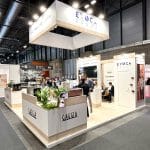
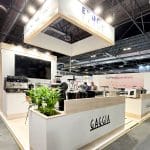
For coffee machine manufacturer Evoca Group at GUEXT 2024 in Madrid, we designed and built a 52.5 m² custom stand where sustainability was a core part of the brief. We used FSC-certified wood, low-impact ecological paint, reusable modular structures that minimise waste and can serve future events, and low-consumption LED lighting. The stand still delivered everything a coffee brand needs: live tasting and demonstration areas and a spacious meeting room for distributors and partners.
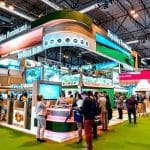
At Vitafoods Europe 2025, our stand of almost 200 m² for Hausmann Aromatic used FSC wood, suspended planting and natural fabrics to express the brand’s botanical origins. Sustainability and visual impact went hand in hand.

Cost: myths and reality
Sustainable materials are sometimes slightly more expensive at first, particularly certified or high-quality ones. Over several shows, however, they tend to pay back through reuse, lighter transport and less waste to manage. As a reference for overall budgets, a basic modular stand costs from €3,000–6,000 and a mid-size custom stand €20,000–30,000; premium stands for major international fairs can exceed €100,000. A reusable core increases the first investment slightly but lowers the cost of every following show. Read more in our guide to exhibition stand costs in Spain.
Final design tips
To make the most of sustainable materials, pay special attention to design. Smart use of space, a colour scheme in line with your brand and natural elements can all enhance the visitor experience. Sustainability is not at odds with creativity: sustainable materials offer interesting textures, finishes and personalisation options. Work with a stand builder experienced in lower-impact projects, who can guide material and finish selection, and plan points of interaction such as product samples, interactive screens or seating so people feel at ease and stay longer.
Frequently asked questions about sustainable exhibition stands
Are sustainable stands more expensive?
Initial costs can be slightly higher with certified or high-quality materials, but over several shows they are usually cost-effective thanks to durability and reuse.
How do I know the wood in my stand is really sustainable?
Ask for recognised certifications such as FSC or PEFC on boards and timber. These bodies audit the origin of the wood and ensure forests are managed responsibly.
Can a stand made of recycled cardboard be reused?
Yes, if it is well designed and handled with care. Good-quality structural cardboard can withstand several uses, although it should be kept away from extreme humidity.
What happens to the stand materials after the fair?
Reusable elements can be stored for future events; we keep them in our Barcelona workshop. Materials that cannot be reused should be separated and sent for recycling. Some items can also be donated to organisations that can use them.
Are sustainable stands as attractive as traditional ones?
Absolutely. Sustainable stands can have innovative designs, striking finishes and great potential for personalisation, and they often spark curiosity and admiration for their approach.
Can I claim my stand is “carbon neutral”?
Only if you have measured its footprint and can back the claim. EU rules on environmental claims are tightening, so it is safer to describe specific actions, such as reused structures, certified wood, LED lighting or reduced transport.
Plan a lower-impact stand for your next fair
Sustainable materials and smart design combine innovation and responsibility. Choosing certified wood, reusable structures and textile graphics reduces your footprint and waste, and strengthens your brand’s connection with clients and visitors. The best way to succeed is to plan resources carefully, work with an experienced stand builder and stay open to creative ideas. If you would like a custom stand designed for reuse, contact Factoría Creativa or call +34 933 17 17 71.