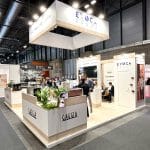
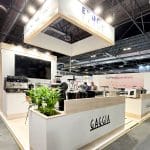
At HIP Madrid 2025, Factoría Creativa designed, produced and built an 80 m² stand for Exclusivas Irei, a distributor of tableware and equipment for hotels and restaurants. This HIP Madrid 2025 stand case study explains how we turned a multi-brand catalogue into a coherent showroom on the show floor, and what other exhibitors can learn from it. For our work at IFEMA, see stand design in Madrid; for the shows we cover, see our fairs page.
What is HIP Madrid?
HIP (Hospitality Innovation Planet) is the reference trade show in Spain for the HORECA sector (hotels, restaurants and catering). Held every year at IFEMA Madrid, it brings together operators, suppliers, entrepreneurs and experts to present innovations, trends and technology for hospitality. The next edition is scheduled for 1–3 March 2027; check the official HIP website for confirmed dates.
The 2025 edition was expected to host more than 500 exhibiting companies and a congress programme with over 400 speakers, with a special focus on artificial intelligence and automation. The show is organised in several sectors:
- Technology and digitalisation: management software, automation and AI for the customer experience.
- Food and beverage: suppliers of ingredients, premium drinks and culinary solutions.
- Design and equipment: furniture, lighting, tableware and materials for hotels and restaurants. This is where Exclusivas Irei exhibits.
- Sustainability and circular economy: biodegradable packaging, waste management and food waste reduction.
- New business models: dark kitchens, smart delivery, franchises and loyalty strategies.
For exhibitors, HIP offers networking with operators and investors, a high-level conference programme and a stage for product launches in front of a specialised audience.

The client: Exclusivas Irei
With more than 17 years in the HORECA sector, Exclusivas Irei is a leading wholesale distributor of specialised tableware. It represents prestigious international brands in Spain, combining function and design. Its range covers dinnerware, cutlery (brands such as Hepp), glassware including hand-blown pieces, mixology tools, table linen (brands such as Chilewich) and buffet equipment.
It also offers consultancy for hotels and restaurants, a showroom of more than 700 m² in Madrid, and a “Triángulo Operativo” service that supplies the three essentials of any establishment: dinnerware (Villeroy & Boch), cutlery (Hepp) and glassware (Italesse).
The challenge
A distributor’s stand has to present many brands without looking like a warehouse. Exclusivas Irei needed an 80 m² space that would reflect its values of exclusivity, quality and innovation, give each represented brand its own identity, and still read as one company, all while inviting chefs, hoteliers and buyers to handle the products.

The HIP Madrid 2025 stand: a showroom on the show floor
We worked closely with Irei’s team to understand its vision. The design rested on these decisions:
- Colours and materials: a calm palette of light timber-effect panels and black surfaces, letting the products provide the colour and conveying a premium feel.
- Brand zones: walls and counters dedicated to each represented brand (glassware, cutlery, dinnerware, kitchen equipment), each with its own signage but within one architectural language.
- Open, flowing layout: low display counters and open sides so visitors could walk in, pick up a glass or a plate, and talk to the team.
- Display lighting: an LED scheme that highlighted each section, essential for glassware and porcelain, and created a sophisticated, welcoming atmosphere.
- Digital content: screens presenting Irei’s story, values and catalogue.
Design, production and build-up
- Design. Sketches and 3D renders to visualise the concept; definition of materials, layout and graphics consistent with Irei’s identity; fine-tuning to maximise display space without compromising the look.
- Production. Once approved, we produced the structural and decorative elements in our Barcelona workshop, using durable, sustainable materials, and tested every component there before the final installation.
- Build-up. We coordinated transport to IFEMA Madrid and installation within the show’s deadlines, supervised each stage, and ran final lighting and technology checks so the stand was ready to welcome visitors.
The result was a stand that captured visitors’ attention and conveyed Irei’s elegance and professionalism, reinforcing its position at Spain’s leading hospitality show.
Because the stand was pre-assembled and tested in our workshop, the build-up at IFEMA was a matter of installation rather than problem-solving. That left time on the last build-up day for the most delicate task on a tableware stand: placing every glass, plate and piece of cutlery, aligning the displays and checking the lighting on each shelf before the doors opened.
Why distributors invest in a stand at HIP
For a distributor like Exclusivas Irei, HIP works as a temporary extension of the Madrid showroom. Many of the hotel and restaurant professionals who walk the halls will never visit a showroom in person, and the fair puts all the represented brands in front of them in one place and on the same day. It is also where distributors meet chefs and interior designers who specify products for new openings, and where they can show new collections from their brands before competitors do.
That makes the stand a sales tool with a specific job: let visitors compare products quickly, find the right specialist and leave with a follow-up meeting. Every design decision on Irei’s stand, from the brand zones to the counter heights, served that purpose.
How to plan an 80 m² stand
Eighty square metres sounds generous until you divide it up. On a product-led stand like Irei’s, a typical split looks like this:
- Display zones (around half of the floor). Wall shelving and freestanding counters for each product family, with enough aisle width inside the stand for visitors to browse without bumping into each other.
- Reception and welcome. A counter near the main aisle where the team can greet visitors, scan badges and direct them to the right brand specialist.
- Meeting area. A few tables for conversations with hotel groups, restaurant chains and buyers, visible but slightly set back from the display.
- Storage room. Indispensable on a tableware stand: replacement stock for broken or sampled items, packaging, catalogues and the team’s belongings.
The number of open sides changes everything. An island or peninsula stand lets visitors walk through from several aisles; an inline stand with one open side needs a stronger back wall and clearer signage to pull people in. We usually test two or three layout options in 3D before the client chooses, so the decision is based on how each option will actually feel to walk through.
Display and security for fragile, high-value products
Glassware, porcelain and cutlery need specific attention on a trade show booth that thousands of people walk through:
- Shelving at the right height and depth, fixed securely to the structure, with lips or recesses where needed so pieces cannot be knocked off.
- Glare-free lighting: LED strips integrated under shelves and spotlights angled to show transparency and texture without reflections.
- Lockable storage for the most valuable pieces overnight, since the halls are open to contractors and cleaning teams outside show hours.
- Surfaces that flatter the product: dark shelves make glass sparkle; light timber warms up porcelain and cutlery.
- Time for dressing the stand: placing hundreds of pieces takes hours. Plan it into the build-up schedule, after the cleaning and before the opening.
Lessons for distributors and multi-brand exhibitors
- One architecture, many brands. Keep materials and lighting consistent and let signage and products differentiate each brand.
- Let people touch. Tableware sells in the hand; counters at the right height and secure shelving make that possible.
- Light the product, not the stand. Glass and porcelain need focused, glare-free lighting.
- Think of the stand as a showroom. Many visitors come to compare; a clear layout by category saves them time.
- Brief early. Ideally 3–4 months before the show. Our guide to exhibition stand costs in Spain helps you set a budget.
Another HIP project from the same year is the Fripozo stand at HIP 2025. For our approach to bespoke stands, see custom stands, and browse our stand projects.
Frequently asked questions
How big was the Exclusivas Irei stand at HIP Madrid 2025?
The stand covered 80 m². We designed, produced and built it from our Barcelona workshop.
What is HIP Madrid?
HIP (Hospitality Innovation Planet) is Spain’s reference trade show for hotels, restaurants and catering, held every year at IFEMA Madrid.
When is the next HIP?
The next edition is scheduled for 1–3 March 2027 at IFEMA Madrid. Confirm dates on the official HIP website.
How do you design a stand for a distributor with many brands?
We use one consistent architecture and lighting scheme and create dedicated zones with their own signage for each brand, so the stand reads as one company with several product lines.
Can you build stands at IFEMA Madrid from Barcelona?
Yes. We produce and pre-assemble the stand in our Barcelona workshop, transport it to Madrid and install it at IFEMA with our own crew, then dismantle it and store reusable elements for the next fair.
What does an 80 m² custom stand cost?
It depends on materials, AV and furniture. As a guide, a mid-size custom stand is typically €20,000–30,000. Floor space is paid separately to the organiser.
Want your products to shine at your next fair?
We design and build stands for international fairs across Spain and Europe as turnkey projects. See our stand design in Madrid page or contact Factoría Creativa. Phone: +34 933 17 17 71.