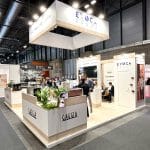
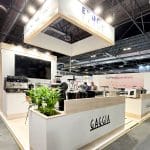
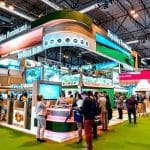
For HIP 2025, the hospitality and foodservice show at IFEMA Madrid, Fripozo once again asked Factoría Creativa to design and build its stand. This case study explains the Fripozo stand at HIP 2025: what the brand needed, how we answered it with a street-food concept, and how we produced and installed it in Madrid from our Barcelona workshop. Fripozo is a repeat client; you can also see the Fripozo stand we built for Conxemar in Vigo. For our work in the capital, see stand design in Madrid.
HIP: the meeting point for hospitality and foodservice
HIP (Hospitality Innovation Planet) is one of the key events for the HORECA sector (hotels, restaurants and catering) in Spain. Each year it brings together suppliers, operators, entrepreneurs and start-ups to present innovations, technology trends and strategic solutions for hospitality businesses. The 2025 edition was expected to welcome more than 500 exhibiting companies and thousands of professionals. The next edition is scheduled for 1–3 March 2027 at IFEMA Madrid; check the official HIP website for confirmed dates.
The show is organised around several areas that matter for exhibitors planning a stand:
- Technology and digital innovation: management tools, automation and AI for customer service.
- Food and beverage: where brands such as Fripozo present their foodservice ranges.
- Equipment and interior design: furniture, lighting and materials for restaurants and hotels.
- Sustainability and energy efficiency: food waste reduction, resource management and circular economy.
- New business models: delivery, dark kitchens and new franchise formats.
That mix means visitors are restaurant owners, chefs, purchasing managers for hotel and catering groups, and franchise operators. They want to taste, see how a product fits their kitchen and talk prices.
The client: Fripozo
Fripozo is a Spanish company that produces and sells deep-frozen foods. Founded in 1989, it is part of Grupo Fuertes, a business group with more than 50 years of history that also includes ElPozo Alimentación. Its growth rests on product innovation and close collaboration with distributors.
Its range covers American-style products such as Crispy Chicken, ready-to-heat dishes, tapas, fish and seafood, and vegetables and pulses. Beyond retail, Fripozo has a strong presence in HORECA, supplying products that make life easier for professional kitchens.
The challenge
Frozen food does not sell itself on a stand. Fripozo needed a space that would make chefs and buyers stop, taste and talk, reflect the brand’s values of quality, innovation and closeness to the customer, and still function as a sales office for meetings with distributors and foodservice chains.

The Fripozo stand: a street-food concept with a working counter
We designed the stand as a casual dining space that hospitality professionals would recognise instantly:
- A serving hatch and kitchen, framed like a street-food kiosk, so products could be prepared and served on the spot.
- Chalkboard-style menus presenting the products the way a restaurant would, not like a catalogue.
- A terrace atmosphere: artificial grass flooring, colourful chairs, high tables and planters, inviting visitors to sit and taste.
- A brick-effect feature wall and dark walls to create warmth and make the branded signage stand out.
- A refrigerated display counter in timber finish, showing products ready to order.
- A suspended circular logo visible across the hall, and screens with audiovisual content about the products and processes.
- Recycling bins built into the layout, a practical detail on a tasting stand.

Design, production and build-up
The project followed three phases:
- Design and concept. We studied Fripozo’s identity and objectives for the show, produced 3D renders of the layout and finishes, and adjusted every detail to stay consistent with the brand.
- Production. We built the structure in our Barcelona workshop with durable, sustainable materials, integrated the lighting and screens, and tested each element before it left the workshop.
- Build-up at IFEMA Madrid. We coordinated transport and installation within the show’s build-up schedule, checked the digital and display equipment, and made final adjustments so the stand was ready for opening.
The result was a functional stand with plenty of character, which helped Fripozo stand out among the exhibitors and reinforce its position as a reference supplier for the hospitality sector.
Lessons for food brands exhibiting at HIP
- Design for tasting. Plan the kitchen, power, water and storage from the start; they shape the whole layout.
- Speak the visitor’s language. Chefs respond to menus and service counters better than to product shelves.
- Give people somewhere to sit. A terrace area turns a quick taste into a conversation.
- Check venue rules for cooking. Food preparation, extraction and electrical loads must be declared and approved by the venue in advance.
- Brief early. Ideally 3–4 months before the show. Our exhibition stand planning checklist sets out the steps.
Building at IFEMA Madrid from Barcelona
Fripozo’s stand, like most of our Madrid projects, was produced in Barcelona and installed at IFEMA by our own crew. For exhibitors, that model has three practical advantages:
- Everything is checked before it travels. The stand is pre-assembled in our workshop, so problems are solved at the bench, not in the hall during build-up.
- One team from design to dismantling. The people who designed the stand supervise its installation, which keeps finishes and details as approved.
- Reuse across fairs. After the show, reusable elements return to our workshop and can be adapted for the client’s next fair, in Spain or elsewhere in Europe. For Fripozo, that means a consistent brand presence across shows such as HIP and Conxemar.
For a food stand, we also plan the technical side early: the electrical load of fridges, ovens and screens, the water supply if needed, and the documentation IFEMA requires for food handling and fire safety. These are the details that a generic trade show booth package rarely covers, and the ones that cause delays on site when forgotten.
As a guide to budgets, a basic modular stand starts at €3,000–6,000 and a mid-size custom stand is typically €20,000–30,000; floor space is paid separately to the organiser. Our guide to exhibition stand costs in Spain explains what drives the price.
See more of our work for the food sector on our food exhibition stands page, or read about another HIP project, the Exclusivas Irei stand at HIP Madrid 2025.
Frequently asked questions
What is HIP?
HIP (Hospitality Innovation Planet) is a trade show for the hospitality and foodservice sector held at IFEMA Madrid, covering food and beverage, equipment, technology, sustainability and new business models.
When is the next HIP?
The next edition is scheduled for 1–3 March 2027 at IFEMA Madrid. Confirm dates on the official HIP website.
Can you build stands with a kitchen or tasting area?
Yes. We plan serving counters, refrigerated displays, power and storage from the start and handle the technical documentation the venue requires.
Do you build stands in Madrid if you are based in Barcelona?
Yes. We produce in our Barcelona workshop and our own crew installs at IFEMA Madrid, as we did for Fripozo at HIP.
Has Fripozo worked with Factoría Creativa before?
Yes. Fripozo is a repeat client; we have also built its stand at Conxemar in Vigo.
How far in advance should I plan a stand for HIP?
Ideally brief your stand builder 3–4 months before the show. For an early-March edition, that means starting in November or December, so design approval, venue documentation for any cooking or food handling, and production can be completed without rushing.
Exhibiting at HIP or another food show?
We design, produce and build stands that let your product be tasted and remembered. See our stand design in Madrid page, browse the fairs we work at or contact us. Phone: +34 933 17 17 71.